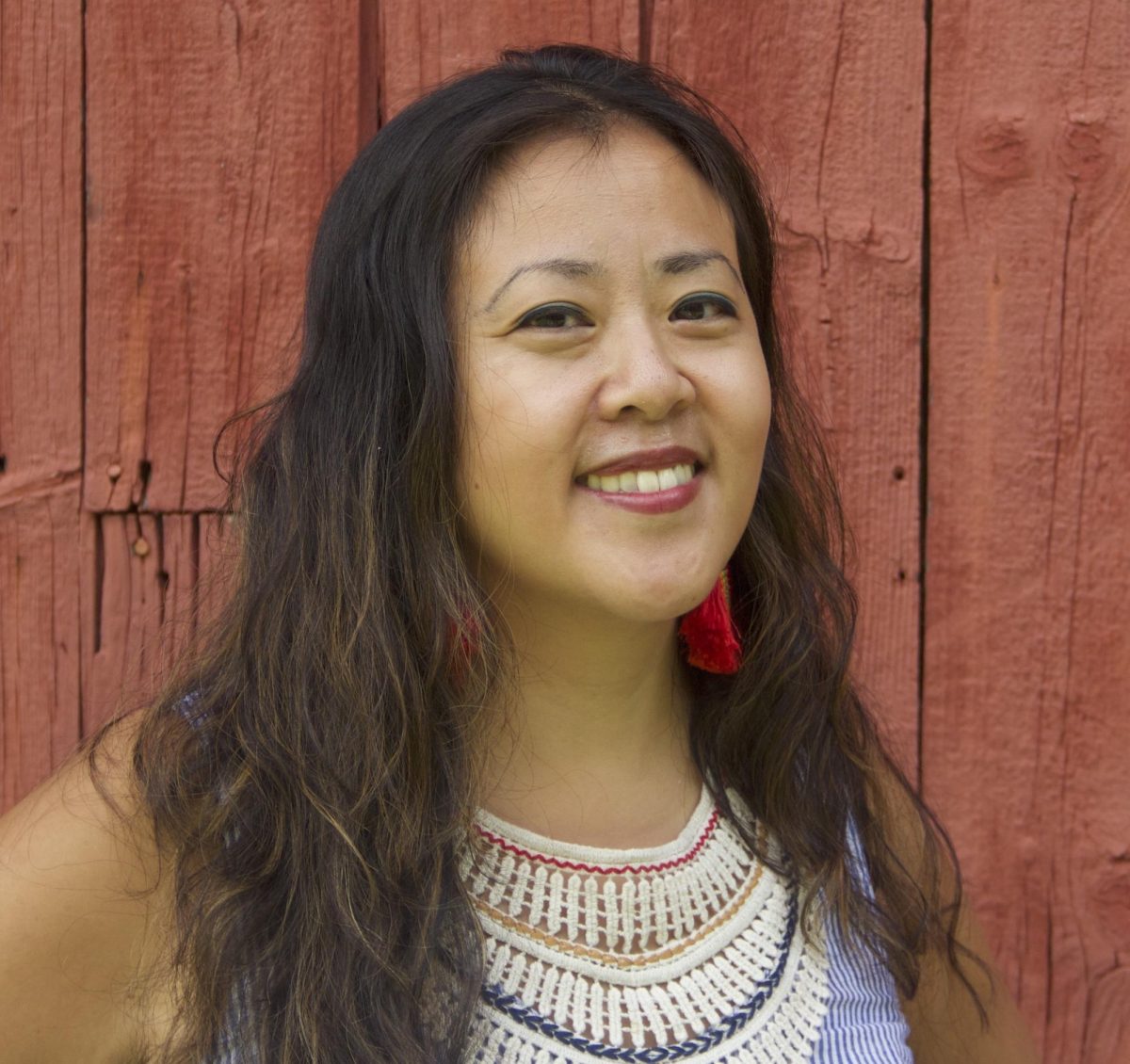
56-year-old Alexi Brock spends her days like most artists do – hours in the studio, playing with different forms of media and color combinations to create the newest addition to her art collection. When she’s not in the studio, she’s in her classroom, instructing the newest generation of artists. Since childhood, Brock has known what she wanted to do with her life. Her parents were painters, and she wanted to follow in their footsteps, yet on her own terms. With an ambitious spirit and imaginative mind, she began her career as an artist and art teacher.
In her freshman year at the School of Visual Arts (SVA) in New York, fine arts students were offered a minor in art therapy or art education. Alexi chose the art therapy option. Then, scheduling conflicts ensued, and she was left with the choice that led her to her current career: art education. “I ended up loving it,” Brock said. With a group of three classmates, she signed up to teach forty second graders at a school in New York the next week. The plan was to make mobiles. What Brock made instead was a decision to pursue her career in the arts.
“The whole thing was a fail, you know, but at the end of the lesson all these second graders can learn how to tie a knot, that’s all they went home with. And so, when we went back to class the next week, the forty people in class was now eighteen, and the teacher was like ‘perfect, now we can start.’ She’s like ‘because teaching is nursing, you have to be in to it’, I fell in love with it. You either love the chaos, or you hate the chaos.” Brock seemed to love the chaos, because this experience motivated her to continue her minor in art education.
To Brock, teaching is not a “matter of intelligence.” It’s a passion. That is what has led her to be a public art schoolteacher for the last 35 years. Throughout her time at New Rochelle High School, the arts department has had its ups and downs. Recently going from nine art teachers to six, she thinks the decline in educators is a partial result of the decline in creativity. Brock believed the administration during her first two decades was “excellent at a vision” and that they “really built this program.” Now, she says, things have changed. “I feel like we’re mimicking what’s happening in the world,” says Brock. With the current political and social climate, art is an extremely powerful and valuable mode of expression. Her main concern is that students are not connected with the act of making art, but instead, the score they will receive on a test. When she asks students to do a free project with a certain medium, they express their dismay and want more direction. The attitude is “what’s gonna get me an A?”, not the enjoyment of making art.
Brock thinks among the culprits to blame is easy access to social media and the internet. “As much as I love the internet, I hate it,” joked Brock. She explained that the decline in originality and attention-spans is due, in part, to the convenience of using AI and social media as inspirational tools. “They [the students] think everything’s done in a few seconds, and they get bored quickly or they don’t want to work on it anymore.”
As a practicing artist for decades, Brock previously used file cabinets of artist files and magazines for inspiration. She curated different media for ideas, spending hours looking through different publications. It was about the process. Now, young artists use Pinterest and Instagram for artistic direction. “We’re not teaching free thought, and we’re not teaching thinking out of the box. We’re just teaching towards a test. All these kids are just checking a box, you know?”
Brock sees the lack of research into art in different respects, such as music. “It’s like Spotify or something. Nobody sits down and listens to a whole album. They listen to a song. They’re so used to little pieces of things and they don’t see anything as a whole unit,” Brock reflected. As someone who would spend hours sitting on her bed and listening to a whole album, it’s difficult for Brock to see the decline in wanting to experience art in its entirety. Much like a musical artist choosing a sequence of songs for their album, Brock sees the experience of creating physical art as a sequence of time.
Her piece of advice for young artists? Don’t be fooled by a thirty second reel. That thirty second reel is someone’s eight hours of studio time. People are so focused on what the “best” is, that they forget the magic of creating art itself. What you see online is the good stuff. Perfection. In reality, these artists took weeks, days, and hours to complete their work. According to Brock, the main luxury in life is to have time. “If you have time, that means your bills are paid, your mortgage is paid,; your rent is paid, you know, whatever,” Brock says. As an adult, most free time in the day is taken up by cooking, doing laundry, or parenting. Brock says that finding time in the studio is a luxury. As her life has shifted, so has her free time. When she had first gotten a job, Brock painted on the weekends at night. After she had her son, she painted between his naps or in the morning before he woke up. “Though I have more time because he’s a grown up, I’m very nostalgic and miss my baby. The grass is always greener on the other side,” she says.
Brock believes that part of the path to growing as an artist is failing and trying again. “It’s about you experimenting. It’s about you failing. It’s okay to fail. It’s okay to be wrong. It’s okay to erase something.” These are phrases Brock uses when her students feel the urge to give up and turn to Pinterest for guidance. This is not to say that students’ creativity cannot be garnered with a bit of pushing. When Brock gives her students clay for ceramic making, she immediately notices a difference in their demeanor. “There’s something about sticking your hands in something and kneading it, like sticking your hands in dirt is a really good thing,” said Brock.
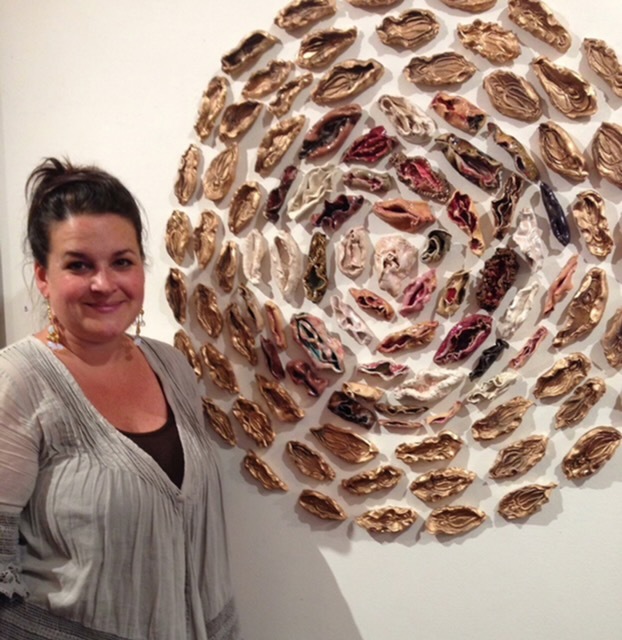
The noise of social media contributes to this need for constant reassurance and perfection in our everyday lives. Brock says, “It would be nice if the world was a lot more quiet, you know?” In a way, though, this noise can be used to express opinions and movements for greater good. Brock’s work “leans towards being a woman, being a human, and has a lot of anatomy in it.” For Brock, the main goal is teaching students how to use the media, to enable them to bring their imaginations to life. She believes it’s a great way for young people to express themselves. “When your subconscious takes over, when you get in that zone, where you’re just doing it and not thinking logically, that’s the best time,” says Brock.
As the world of art turns a new page in the age of social media, Brock is turning a new page in her book too. She’s retiring this year after 35 years. “I’m very excited to do full-time art, because I’ve always been doing it at the same time as teaching. So that’s my new thing,” she says. Although her passion for teaching remains, Brock aims to focus on nurturing her own skills in the studio. For her, it’s time to begin a new chapter.