
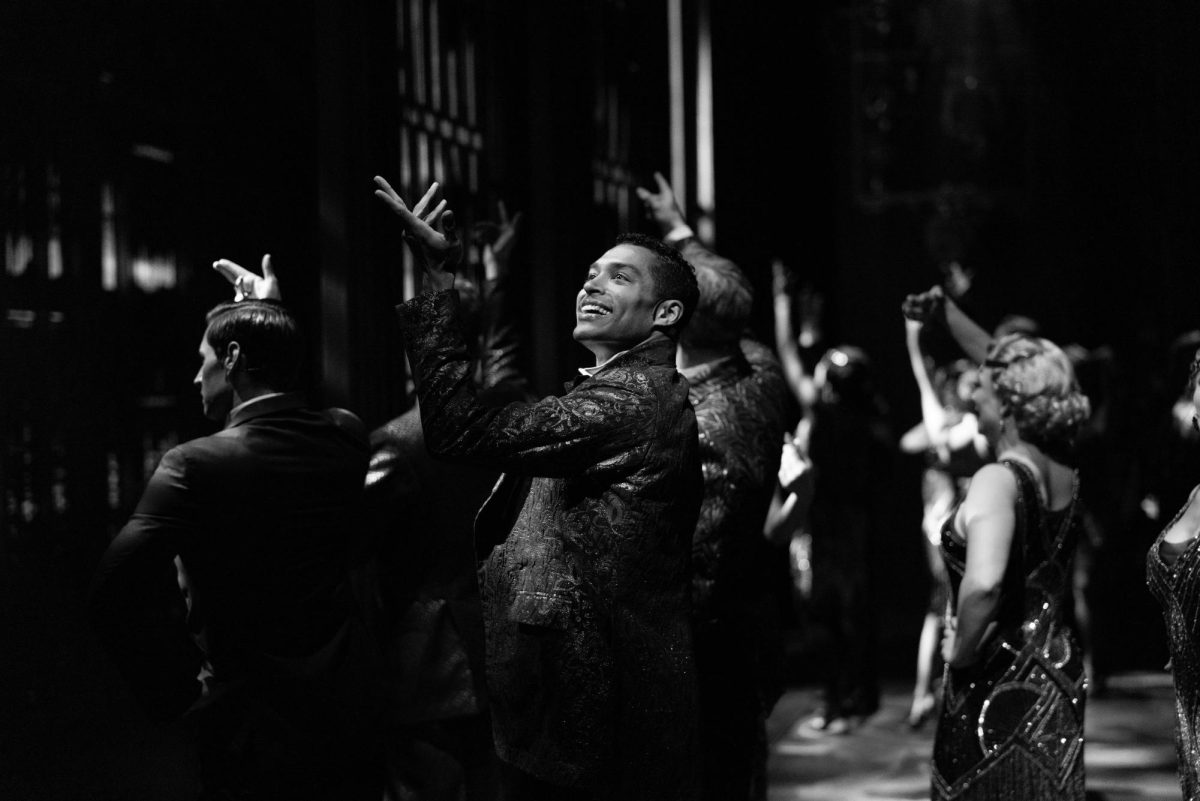
At the Samuel J. Friedman Theatre on Broadway, the last showing of PUNCH was performed at the Manhattan Theatre Club on Nov. 2, 2025. The U.S. run of the play started on Sept. 29 after premiering in England in May of 2024 at the Nottingham Playhouse. It then played at the Young Vic before a roughly two month-long run at the Apollo Theatre in the West End. The play, written by James Graham and directed by Adam Penford, is based on the memoir Right from Wrong by Jacob Dunne and is based on Dunne’s own true story of his 2011 fatal one-punch.
PUNCH follows the story of a young man named Jacob as he tears through the streets of Nottingham with a gang. One night, the group was bar crawling, when he attacks a man and unknowingly delivers a fatal one-punch blow that changes the trajectory of his life forever. Having a difficult time grappling with the consequences of his mistake and trying to move on with his life, Jacob finds restoration in an unlikely way through communication with the family of the man he murdered. The play emphasizes themes of restorative justice, the impact of grief and the role of the education system in young neurodivergent people’s lives. The specific topics of restorative justice and the educational system’s role in people’s upbringing remain ever so contested and relevant in our modern world.
Restorative justice, or a practice of creating a different approach to dealing with crime and its impacts, focuses on communication between victims and those responsible in effort to repair harm and have a consistent way forward. The most substantial impact of restorative justice is its ability to lower recidivism rates 10-25% compared to conventional methods. The play, which will tour schools in the UK in 2027, has resonated with younger audiences, allowing for it to become a tool in education.
Brooke Engen, assistant movement director for PUNCH, provides insight on how these subjects influenced the making of PUNCH.
“I was contacted by someone I know at MTC, saying ‘I’d love to set up a meeting for you and Leanne Pinder’,” Engen said. Pinder is the original movement director of PUNCH. Engen approached the poignant work and production of PUNCH with care.
“We met over Zoom and talked about the project. We talked about working with actors and her process in putting up the show,” Engen said. “And then I found out a couple days later that we were going to be working together and collaborating on this production.”
Engen dove into the project, combing through source material that Pinder sent her. Together, they looked to see how these real people moved, talked and if there were any signature mannerisms they could tie into their portrayals with the actors onstage. Engen discussed how with an ensemble of ten rather than six people – the original ensemble count in London – they were able to make the show feel a lot larger and immersive. Engen’s role was to make sure this succeeded.
“Plays often hire some type of movement director,” Engen said. “Adam Penford, the director, brought Leanne on because there was such an element of not only the fight, but pub culture and drugs and drinking and mayhem. That type of chaotic energy needs movement to showcase the building of it all.”
Pinder and Engen a company warm up to help get the actors adjusted to using their bodies in different ways.
“We try to work out those types of body dynamics. We help them kind of find those ticks and quirks that can help them lock into form in a very quick way,” Engen said.
Engen points out a particular moment in the show, the dancing in the pub crawl sequence being a “very vulnerable experience” that they, as movement directors, help ease the actors into.
Since all the designers from the UK team had been brought along for the ride, the tech process into previews was a very quick turnaround. The tech process only lasted about a week and half. When the show started up in late September, the team already knew it was slated to run until November. With understudy rehearsals and covers being needed, the limited journey was still made interesting with five new people being brought onto the show before it finished.
The set, a rounded ramp tilted toward the audience, was a particular acclimation for performers.
“It’s a forced perspective of the tunnel into the meadows, but it also is reflective of the talking circle element in the restorative justice process and in recovery,” Engen said. “It’s there as their jungle gym, so they can do parkour and jump off things. It is steep and it is extremely athletic to be on, so to get quickly acclimated into, I commend them to no end.”
Every movement within the show was calculated to match the energy of the time.
“In the talking circle, all the chair stuff is circular, and how people enter the stage is circular. When we get into the court and the hospitals, everything is hard angles. Everything is so well thought out,” Engen said.
PUNCH is an example of one of the many ways art can be used in education, building bridges in an attempt to limit violence in adolescence.
“Art changes lives. It has the power to change the way you think. It has the power to inspire you to love more, to have empathy, to communicate in different ways,” Engen said. “From working on PUNCH I feel like it’s so great to see these stories on stage. Because even as someone who was in the rehearsal process and watched every preview, there are still times when I would be watching and forget that I’m watching a show — I feel so completely immersed in these people’s lives.”
PUNCH deals with some serious subject matter, but Engen says the play is a reminder to carry empathy and communication with you.
“Not only in restorative justice, but as well as in making art, is that it’s about communication and empathy and truly trying to see from other people’s perspective,” Engen said. “And when you can do that, your art gets better.”
For more information on restorative justice and laws in your state visit ncorj.org/laws.
Note: This article is a collaborative culmination of a project in correspondence with the Fall 2025 section of SW 204: Power and Difference, taught by Dr. Marnie Brady. This was an exploration in interdisciplinary studies. Of the three authors, we each had a specific skill set that made this project possible. We had journalism expertise, actor knowledge and vocabulary and MMC specific connections that helped us not only interview a working theatre professional, but dive deeper into themes of restorative justice and share our experience with our learning community. In publishing this piece we take action by sharing what we have learned in an effort to educate our community about restorative justice.
















Tyler Baldenegro • Dec 11, 2025 at 4:32 pm
Very interesting to read quotes that k what the process was like through the view of the movement director. I’m curious over time how they will reflect on the work and how this show will inspire future work for them.
Riley VanOrden • Dec 11, 2025 at 4:03 pm
Amazing job Lark, Morgan and Jioia!!!